
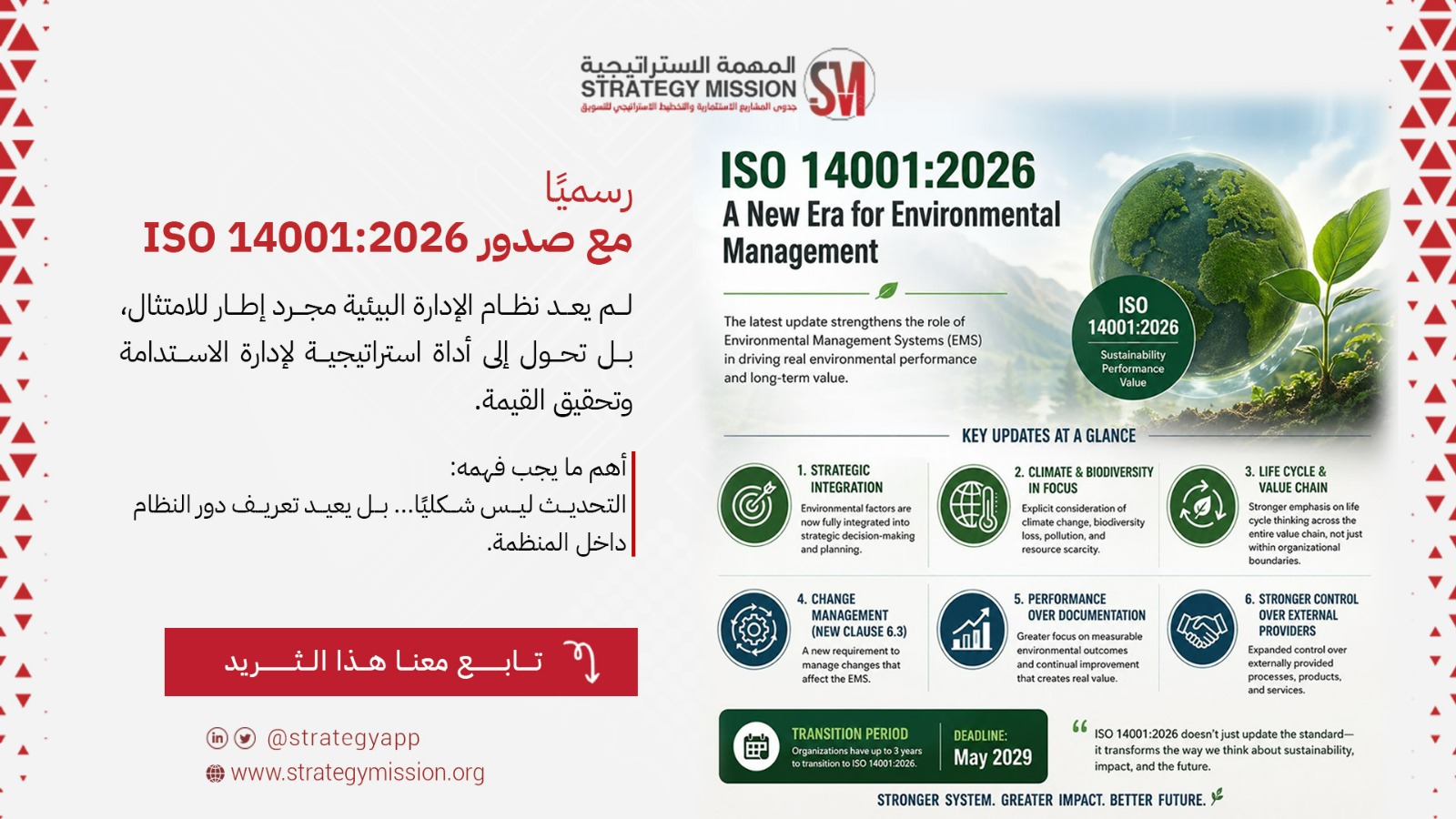
ISO 14001:2026 Environmental Management: 6 Strategic Changes
ISO 14001:2026 environmental management is no longer just a compliance framework—it has evolved into a strategic tool that enables organizations to manage sustainability and create measurable business value.
With its official release, this updated standard redefines the role of environmental management systems within organizations, shifting from operational control to strategic impact.
🏭 SIRE evaluation and progress toward the Future Factories grant
Request the service here
🧭 Initial consultations (pre-service request)
📞 Direct contact with Mr. Muhammad Agha:
Start conversation now
Why ISO 14001:2026 Environmental Management Matters
The new version introduces a fundamental shift: environmental performance is now directly tied to strategic decision-making and long-term value creation.
- Integration with corporate strategy
- Focus on measurable environmental outcomes
- Alignment with global ESG frameworks
1) Environmental Management Becomes Strategic
Environmental considerations are now embedded into top management decisions, ensuring sustainability is part of core business strategy—not a separate function.
2) Climate Change and Biodiversity Are Now Core Elements
Organizations must now include broader environmental risks in their context analysis:
- Climate change impact
- Biodiversity risks
- Resource scarcity and pollution
This reflects strong alignment with ESG and global sustainability priorities.
3) Expansion of Life Cycle and Value Chain Thinking
Environmental responsibility now extends beyond the organization to include:
- Suppliers
- Customers
- Full supply chain impact
This change reinforces accountability across the entire value chain.
4) Introduction of Change Management (Clause 6.3)
Any operational or supplier-related change must now be assessed for environmental impact before implementation.
- Reduces unforeseen risks
- Improves system maturity
- Enhances proactive decision-making
5) From Documentation to Real Performance
The focus has shifted from maintaining documents to demonstrating real environmental improvement.
- Evidence-based performance
- Link to business value
- Continuous measurable improvement
6) Stronger Control Over External Processes
Organizations must now ensure environmental control over externally provided products and services, not just internal operations.
- Supplier compliance
- Outsourced process control
- Extended accountability
What Does This Mean for Organizations?
Organizations that treat ISO 14001:2026 environmental management as a compliance exercise will fall behind.
Those who integrate it into their strategy will gain:
- Competitive advantage
- Stronger ESG positioning
- Improved stakeholder trust
To align your system with broader governance frameworks, see
how to integrate ISO standards into your strategy.
Transition Period
Organizations typically have a transition period of approximately 3 years to migrate to the new version.
Conclusion: Sustainability as a Competitive Edge
ISO 14001:2026 environmental management marks a turning point—transforming sustainability from a compliance requirement into a strategic growth driver.
The question is no longer whether you comply… but whether you compete through sustainability.
For more details, visit
ISO official environmental management standards.

لا يوجد تعليق